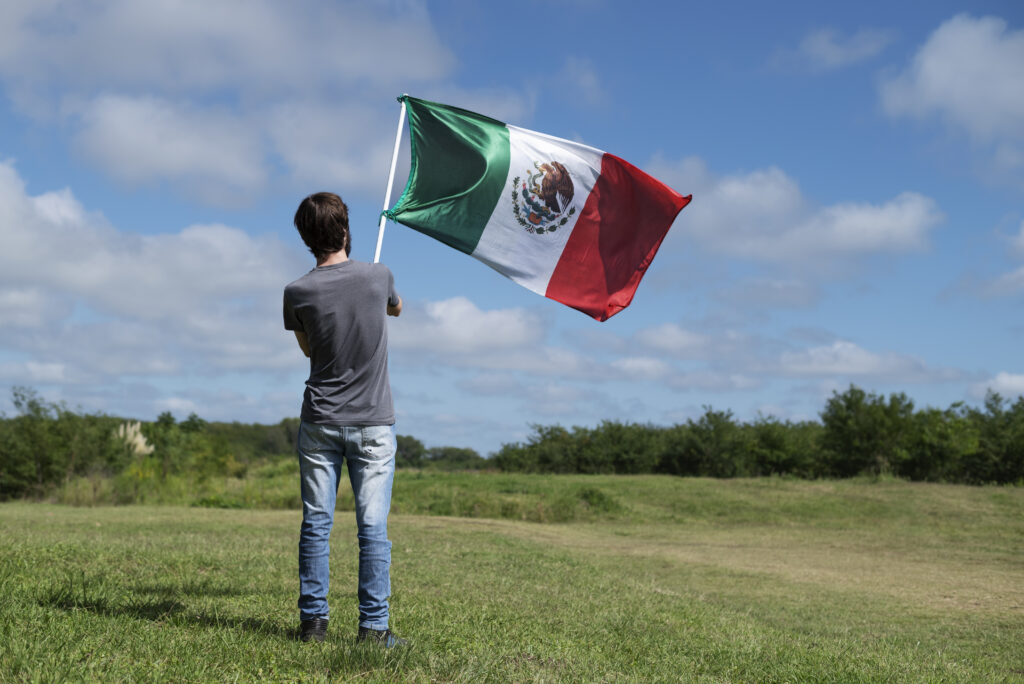
Why Mexico is the gateway to Latin America
Mexico holds a strategic position in exporting to Latin America. It is a young, connected market, with a consumer increasingly open to international brands. This makes it a natural destination for anyone starting to test regional expansion.
However, that appeal coexists with real complexity. Mexican fiscal requirements demand specific attention, and the traditional requirement of a local entity to operate formally pushes away brands that just want to test the market first.
So, many brands end up delaying entry into Mexico precisely because of this barrier, even facing a receptive consumer. The mistake lies in treating a local entity as a mandatory prerequisite, when an alternative path exists.
Therefore, understanding that it is possible to test Mexico without that initial commitment changes the entry decision. The gateway exists, it just depends on choosing the right path to cross it.
What validating the Mexican market before investing in infrastructure means
Validating the Mexican market means selling there with minimal investment, just enough to observe whether the audience responds to the brand. This differs from building your own operation, with an entity in place, dedicated staff, and fixed infrastructure.
In practice, this validation involves making the product available for sale in Mexico through an entry path that already handles fiscal requirements, without requiring the brand to build that alone from the start.
The goal at this stage is watching concrete response metrics, conversion, recurrence, and average order value, before committing capital to permanent structure. This way, the decision to invest heavily rests on real data, not expectation about the Mexican market.
That is why validating Mexico is not a smaller version of entry. It is a distinct stage, built precisely to inform whether full structural commitment makes sense afterward.
What the B2B2C model is, and how it solves the Mexican fiscal side
B2B2C stands for Business to Business to Consumer. In this model, the brand sells to an intermediary partner, who in turn sells to the Mexican end consumer. That partner already operates formally within Mexico, with the full fiscal structure resolved.
This completely changes the entry equation. Instead of the brand needing to navigate Mexican fiscal requirements alone, such as precise fiscal classification and tax compliance, the partner already operates within those rules, acting as Merchant of Record.
In practice, the brand keeps selling its product to the Mexican consumer, but the formal sale structure happens through the certified partner. This eliminates the need to open your own entity just to test whether the market responds.
As a result, the B2B2C model works as a bridge. It allows access to the Mexican consumer using fiscal structure that already exists, without the brand needing to build its own from scratch before knowing if the investment is worth it.
Why delivering DDP changes the Mexican consumer’s experience
DDP stands for Delivered Duty Paid. In this model, all import taxes and duties are already calculated and paid at the moment of purchase, and the consumer receives the product with no additional charge at delivery.
For the Mexican consumer, this experience tends to be decisive. When the buyer discovers an extra cost only at delivery, the common reaction is refusing the package, or filing a dispute, hurting both the sale and the brand’s reputation.
Delivering DDP through the B2B2C model means the partner already calculates and charges the correct amount at checkout, factoring in current Mexican fiscal requirements. The buyer sees the total cost before deciding, and receives exactly what they expected to pay.
So, DDP is not just a technical trade term. It is the difference between a delivery that confirms the buyer’s expectation, and one that generates frustration at the last moment of the buying journey.
How to enter the Mexican market without opening a local entity
Entering Mexico without opening a local entity depends on a platform that already solves Mexican fiscal requirements, operates via the B2B2C model, and delivers DDP, without requiring the brand to build each piece separately.
In this model, the brand sells to the Mexican consumer using structure already in place. The certified partner already handles fiscal classification, rates on the route, and correctly collected tax, acting as a formal intermediary within Mexico.
This means the brand can test the Mexican market’s appeal with investment proportional to the test, not to the long-term commitment. About 44% of Mexican e-shoppers have already bought on international sites, a broad behavior that only needs correct execution to convert.
ShipSmart solves Mexican duty calculation, fiscal structure via Merchant of Record without a local entity, and competitive rates on the route. More than 600 brands already operate on that same foundation.
The US-Mexico trade framework keeps getting reviewed, and what that means for your entry
The trade framework connecting the United States and Mexico goes through a formal review cycle, with revisions occurring periodically as both governments reassess terms. This is not a one-time event, it is a structural feature of that trade relationship.
For a global or American brand entering Mexico, this means the terms governing cross-border trade between the two countries can shift over the coming review cycles. Pricing and compliance built on a single snapshot of current terms risk falling out of date once a review concludes.
This instability reinforces the same lesson that applies across Mexican fiscal requirements more broadly. Correct fiscal classification, and a partner who tracks the current rule rather than a fixed assumption, matters more than betting on any single trade provision staying unchanged.
So, the right strategy is not waiting for review cycles to settle before entering. It is ensuring fiscal classification stays accurate from the first shipment onward, through a partner already fluent in current Mexican requirements.
Frequently asked questions
How do you validate the Mexican market before investing heavily?
By selling with minimal investment, watching conversion, recurrence, and average order value over weeks, before committing capital to your own entity or dedicated staff.
Do I need to open a company in Mexico to sell there?
Not necessarily. It is possible to sell via the B2B2C model, using a partner that already operates formally in Mexico and acts as Merchant of Record.
What is the B2B2C model?
Business to Business to Consumer. The brand sells to an intermediary partner already established in Mexico, who in turn sells to the end consumer, solving the fiscal side without the brand needing its own entity.
How do you deliver DDP in Mexico?
Through a partner that already calculates and charges the correct tax at checkout, factoring in current Mexican fiscal requirements, delivering the product with no additional charge at delivery.
Book your demo
If your brand is evaluating entering the Mexican market, it is worth understanding how to test demand without opening your own entity from the start. Book a demo and we will show you how it works in practice.