A shipment can clear customs perfectly and still create a poor market entry model. That is the decision behind bonded warehouse vs local fulfillment: should inventory stay under customs control until demand is proven, or enter the market ready for domestic delivery?
The short answer: use a bonded warehouse while demand is unproven and you want to defer duty, and use local fulfillment once demand is repeatable and delivery speed drives conversion. Most brands do both, by SKU, and move products from one model to the other as each market earns it.
Rule of thumb. A bonded warehouse protects cash before demand is certain. Local fulfillment protects the customer experience after it is.
5 years is the longest a US customs bonded warehouse can hold goods before a decision, counted from the date of import.
No general time limit applies to goods in an EU customs warehouse, with duty and import VAT suspended while they stay.
Up to 99% of duties can come back through unused merchandise drawback, when goods are exported unused within five years.
Bonded warehouse vs local fulfillment: the core difference
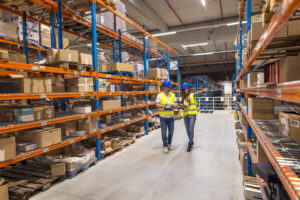
A bonded warehouse holds imported goods under customs supervision. Duties and import taxes are generally deferred while the goods stay there, and they are triggered when the goods are withdrawn for domestic sale. If the goods leave for another country instead, the deferred duty is not payable.
Local fulfillment works after the goods are imported and released into free circulation. The brand has already paid the duties and taxes, and orders then ship to customers as local parcels, with no customs event on each delivery.
| Question | Bonded warehouse | Local fulfillment |
|---|---|---|
| When is duty paid? | At withdrawal for domestic sale | At import, before storage |
| Can orders ship straight to local consumers? | Only after the goods are withdrawn and entered | Yes, as domestic parcels |
| Best for | Unproven demand and uncertain assortment | Repeatable demand and fast delivery |
| Main advantage | Cash flexibility and re-export options | Speed and a domestic experience |
| Main risk | Compliance and inventory accuracy | Capital tied up in stock and duty |
The two flows, side by side.
Bonded: goods arrive in bond, then wait under customs control. A release triggers a customs entry and duty, and only then do domestic orders ship.
Local: customs entry and duty happen at arrival. Stock sits in the local warehouse, and each order leaves as a domestic parcel.
When a bonded warehouse creates an advantage
A bonded warehouse helps most when you need stock near a market but do not want to pay import charges on every unit up front. That improves cash conversion when turns are uncertain, seasonality is high, or you test several countries from one regional hub.
Example, hypothetical. A retailer sends 5,000 units into the United States before it knows which sizes and colors will sell. Each unit has a customs value of $30 and carries a 12% duty, which is $3.60 per unit. Under local fulfillment, the $18,000 of duty leaves the bank on arrival. Under a bonded model, the brand pays only on units released. If 2,000 units sell in the first period, it pays $7,200, and $10,800 stays in cash. Storage and handling fees reduce that gain, so net it out.
Bonded storage also supports B2B distribution. A brand can stage goods near wholesale accounts and time releases against confirmed purchase orders. In addition, goods redirected to another market can avoid US duty entirely, subject to the customs treatment and the documents.
Worth knowing. The duty rate that applies is the one in force on the withdrawal date, so a rate change can help or hurt you. Also, a bonded warehouse is not a foreign trade zone. A zone has no statutory storage limit and offers extra options, such as locking the rate at admission.
Watch out. Every withdrawal needs a compliant customs entry, and the operator posts a bond. Inventory errors then become compliance problems, not only warehouse problems. Confirm that your product category and your planned movements qualify.
When local fulfillment is the better model
Local fulfillment usually wins when customer experience and delivery speed limit growth. Once inventory clears into the market, orders move through domestic carriers with predictable transit, familiar tracking, and simpler returns.
5 to 15 business days is the typical time for direct cross border delivery, against 1 to 3 business days with local fulfillment, according to provider data from Stord.
That gap matters against domestic retailers. A shopper who sees a two to three day promise is less likely to abandon checkout than one who faces a long window and uncertain import charges. Local stock also supports later order cutoffs, lower last mile cost at scale, and practical exchanges for apparel and footwear.
The trade off is capital. Duties and import taxes are paid before the order exists, and unsold stock already sits in the market. Therefore, local fulfillment works best when demand is repeatable enough to plan replenishment.
Local also does not mean compliance disappears. You still need the importer of record, the classification, the valuation, the tax treatment, and the commercial invoices. The difference is that you manage them at bulk import, not at each customer’s door. For tax design, see our guide to VAT registration workflow automation.
Compare the full cost, not just the duty rate
The wrong comparison is bonded storage fees against local pick and pack fees. The useful comparison is the total cost of serving a market at a defined service level.
| Cost lens | Bonded favors it when | Local favors it when |
|---|---|---|
| Inventory velocity | Stock sits for months, or demand swings by SKU | Most of a shipment sells in a short, predictable period |
| Delivery promise | Slower delivery is acceptable while you validate | Speed lifts conversion and cuts support contacts |
| Returns | Returned goods can be recorded under customs controls | Domestic returns are easy for the shopper |
| Tax and fiscal structure | The structure supports staged release | The seller, importer, and invoicing roles are settled |
A local model can cost more up front and still produce a lower cost per delivered order once volume reaches carrier breakpoints. Also model the commercial gains, such as conversion, support contacts, and failed deliveries, in the same sheet as freight, storage, duties, and labor.
Another route to duty relief. If you pay duty at import and later export unused goods, drawback can refund up to 99% of the duty. Deferral keeps the cash with you now, while drawback returns it later.
Choose by SKU, not only by country
One market can need more than one model. Match each product type to the model that fits its demand.
| SKU type | Better fit |
|---|---|
| Fast sellers with stable demand | Local fulfillment |
| Long tail products | Bonded, or direct cross border |
| Seasonal collections | Bonded, until the season confirms demand |
| Goods likely to be redirected | Bonded |
| Return heavy categories, such as apparel and footwear | Local fulfillment |
| Stock staged for wholesale orders | Bonded |
A staged plan that avoids both mistakes
Placing the whole catalog into local stock before you understand demand is one mistake. Relying on cross border parcels after the market outgrows them is the opposite one. A staged plan avoids both.
Stage 1: Direct cross border. Test demand and validate product fit with real orders.
Stage 2: Bonded staging. As volume rises, hold stock near the market while you keep cash flexible.
Stage 3: Local fulfillment for the winners. Once the order profile and the replenishment rhythm are clear, move the fast sellers into local stock.
Which model fits you? Decision triggers
| Choose a bonded warehouse when | Choose local fulfillment when |
|---|---|
| Demand is still being validated and the mix is uncertain | Fast domestic delivery is essential to conversion and retention |
| Duty deferral materially improves working capital | Sales volume and SKU velocity support planned replenishment |
| Goods may be re-exported or allocated across markets | Local returns and exchanges shape the customer experience |
| You can keep the customs controls and the inventory accuracy | You need predictable domestic carrier performance at scale |
Execution depends on one connected operating layer
The facility choice only works when customs, tax, checkout, shipping, inventory, and customer messages work together. A checkout that shows duties and taxes correctly sets the right expectation. Carrier rules route each parcel by service level and cost. Inventory visibility keeps you from promising a product locally while it is still under customs control.
Outside the United States, the rules differ. In the EU, for example, customs warehousing suspends import duty and import VAT while goods stay under the procedure, and goods generally have no time limit there. Therefore, confirm the regime for each market with your customs broker. Our guides on when to use regional fulfillment, multi country inventory planning, and the best metrics for cross border operations help you decide and measure.
Frequently asked questions about bonded warehouse vs local fulfillment
What is a bonded warehouse?
A bonded warehouse is a customs authorized facility where imported goods are stored under bond without paying duty until they are withdrawn for domestic sale, exported, or destroyed.
How long can goods stay in a bonded warehouse?
In the United States, up to five years from the date of import. In the EU, customs warehousing generally has no time limit.
Is a bonded warehouse the same as a foreign trade zone?
No. A bonded warehouse sits inside customs territory and defers duty, while a foreign trade zone is treated as outside it for duty purposes and has no statutory storage limit.
Can I ship consumer orders from a bonded warehouse?
Not directly into the domestic market. Goods must first be withdrawn for consumption, with duty paid, before they reach a local consumer. Orders to customers in other countries can leave from bond as exports.
Which is cheaper, bonded or local fulfillment?
It depends on velocity, delivery promise, returns, and tax structure. Compare the total cost to serve a market, not only storage and handling fees.
When should I move stock from bonded to local?
Move a SKU when its demand becomes repeatable, replenishment is predictable, and delivery speed starts to limit conversion.
Our advice: let demand decide, then move the winners local
Start with one question for each SKU and market: is the demand repeatable? If the answer is yes, and delivery speed shapes your conversion, move that SKU into local fulfillment. Ship Fulfillment places inventory in hubs across Latin America, the United States, and Europe. It receives your stock, stores it, picks and packs orders, and ships locally through partner carriers. It also covers inventory management, inspection, palletization, and consolidation. For a US example, see the Miami fulfillment page.
If demand is still unproven, keep that SKU on direct shipping, or on a bonded structure with your provider, and revisit it as the data arrives. To decide which SKUs belong where, book a call with the ShipSmart team and bring your SKU list and your destination markets.