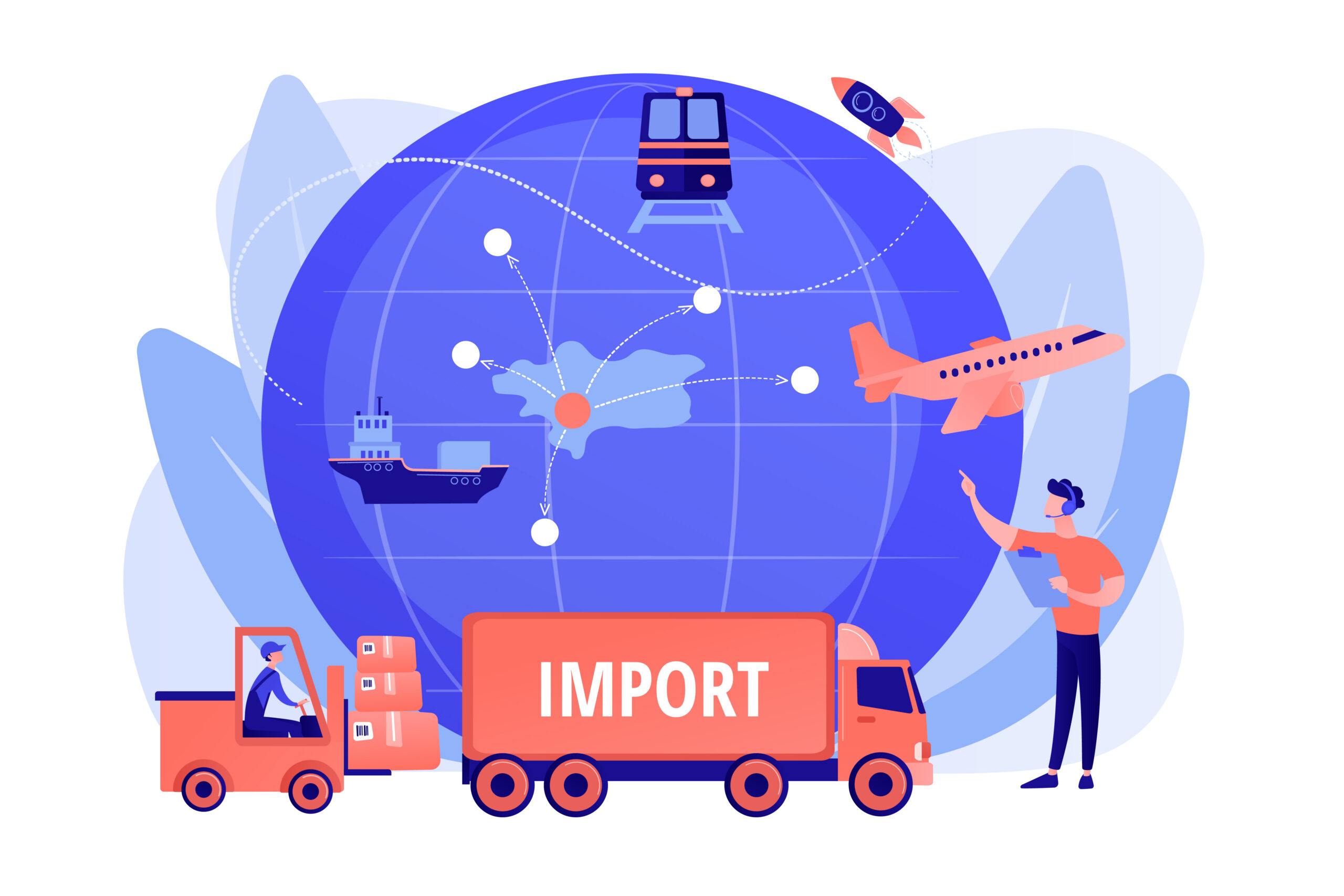
Every international operation grows the same way. It starts with one country, one carrier, one gateway. Then a second market, a second freight forwarder, a new tax tool for the destination country, a returns provider for the region, a Merchant of Record for compliance, and a fulfillment operator for last mile. Six months later, the team is running the business across a dozen dashboards that do not talk to each other.
According to current analyst data cited by Gartner in 2026, fragmented tech stacks incur up to 36% higher total costs than unified platforms. In addition, the same research shows that consolidated stacks deliver implementations 20% faster, with on-time delivery rates 66% higher. In other words, the true cost of running international operations is not in any single tool. It is in the gaps between them.
This article explains why cross border fragmentation quietly destroys margin, where the invisible cost actually sits, and what changes when a single orchestration layer replaces the patchwork of point solutions.
Why cross border operations fragment faster than domestic ones
Domestic operations tend to consolidate over time. A brand starts with a few tools and gradually replaces them with an ERP, a WMS, or a unified commerce platform. Cross border operations move in the opposite direction. Every new country adds a new vendor stack, a new regulatory layer and a new set of data that does not connect to the rest.
The pattern that repeats in every scaling brand
The moment a brand enters a second country, the operation splits. A customs broker for that market, a local tax calculation tool, a currency conversion provider, a country-specific returns partner and a local carrier are added. On paper, each choice looks correct in isolation. However, the cumulative effect is a stack of six to ten specialized vendors per country, none of them designed to share data with the others.
Furthermore, industry data shows the same trend outside logistics. The average company now runs 305 SaaS applications, with 9 new unique applications entering the environment every month, according to Zylo data cited in 2026. For enterprises, that number climbs to 696 apps, growing 37% annually. In consequence, tool sprawl is a structural pattern, not an isolated problem.
Why the standard vendor model does not scale
The traditional vendor model was built for stable, single-country operations. It assumes each specialized provider handles its lane, and the brand orchestrates the seams. That model breaks when the brand operates across five or ten countries with hundreds of shipments per day. As a result, the orchestration cost, in time, headcount and errors, becomes the largest line item nobody planned for.
Where the invisible cost actually sits
The cost of fragmentation rarely shows up on a single invoice. Instead, it hides across five categories that only become visible when the team measures the total cost of running the operation, not the individual price of each tool.
Integration failures and reconciliation errors
Every additional vendor requires an integration, either through API, EDI, spreadsheets or manual re-entry. Every integration is a point of failure. When a customs broker updates a status but the tax tool does not receive the update, the order sits in limbo. When the carrier confirms delivery but the returns system does not sync, the SLA report shows a false negative. Consequently, the reconciliation work needed to keep numbers aligned becomes a full-time function that produces nothing new for the business.
Missed SLAs with no clear owner
In a fragmented stack, when something breaks, there is no single owner. The customs broker blames the freight forwarder. The freight forwarder blames the carrier. The carrier blames the customs broker. Meanwhile, the customer waits, the SLA slips and the CX team writes another manual apology. Furthermore, without a unified system of record, the brand cannot even prove which vendor caused the failure, which weakens negotiation at renewal.
Mispriced shipments
Landed cost calculation depends on real-time coordination between the tax engine, the carrier tariff table and the fulfillment location. When those three data sources sit in separate tools, quotes drift out of sync. The checkout might show one price, the invoice might show another, and the customer might receive a duty bill that nobody expected. According to Baymard Institute data, 58% of buyers abandon cross border carts due to unexpected costs, and 40% specifically due to non-visible taxes. In other words, mispricing driven by fragmentation is not just an accounting issue, it is a conversion killer.
Team capacity spent on firefighting
The most expensive line item is invisible on any invoice. It is the team’s time. When the operations team spends its hours reconciling data, chasing status updates and manually resolving exceptions, it is not building playbooks, negotiating better tariffs or opening new markets. Therefore, fragmented tools do not just cost money, they cost strategic capacity, which is the most scarce resource in any scaling brand.
Compliance blind spots
Finally, fragmentation creates regulatory exposure. Each new country brings a new set of requirements, and each tool holds only its own slice of data. When an audit or a customs inspection happens, pulling a full traceable record across ten disconnected systems takes weeks. In cross border operations, where regulatory changes like the end of de minimis in the United States in August 2025 or Section 122 tariffs from February 2026 arrive with little warning, that latency is expensive.
The two paths brands take, and why one wins
Once the fragmentation cost becomes visible, brands typically choose between two paths. The first is patching, adding more integration layers, hiring an operations coordinator, or building custom middleware in-house. The second is consolidation, replacing the fragmented stack with a single orchestration layer designed for cross border.
Why patching underperforms
Patching feels safer because it does not require replacing anything. However, it multiplies the problem. Each new integration adds latency, adds cost and adds a new potential failure point. Furthermore, the middleware built in-house rarely receives the maintenance it needs, since it is nobody’s product. As a result, the brand ends up running a shadow platform that only a few internal people understand, and every departure of one of those people creates operational risk.
Why consolidation compounds value
Consolidation, by contrast, compounds. When a single layer orchestrates the freight, the tax engine, the returns and the fulfillment across every country, data starts to correlate. The team stops reconciling and starts analyzing. Playbooks become replicable across markets. SLAs become negotiable because there is one owner accountable for the outcome, not five vendors pointing fingers. Consequently, the operation goes from reactive to strategic.
What a single orchestration layer looks like in practice
The idea of consolidation is often confused with the idea of using fewer vendors. That is not the point. In cross border, specialization still matters, and a local carrier in Mexico will outperform a global carrier in that market. Similarly, a Merchant of Record structure in a specific region will outperform a general fiscal tool. The point of orchestration is not to replace those specialized providers, it is to unify the layer above them.
The role of an orchestration layer
A proper orchestration layer sits between the brand’s commerce stack and the network of logistics, tax and fiscal providers. It normalizes the data, handles the exceptions, and provides a single source of truth for cost, timing and status. In practice, this means the brand’s e-commerce platform sends one order, and the orchestration layer routes it to the correct carrier, calculates the landed cost, generates the export documentation, records the transaction under the correct fiscal structure and returns tracking to the customer, all through one interface.
What changes for the operations team
When orchestration exists, the operations team stops being a coordinator between vendors and starts being an owner of the outcome. Furthermore, the CFO gets one report showing landed cost by market. The CX team gets one dashboard for exceptions. The CEO gets one number for margin by country. As a result, decisions accelerate, because the debate about which vendor is right stops consuming meetings.
How ShipSmart delivers orchestration across the cross border stack
ShipSmart is the international logistics platform that consolidates the cross border stack for Latin American brands and global sellers into Latin America. In addition, ShipSmart acts as the orchestration layer between the brand’s commerce platform and the full network of carriers, fiscal partners and fulfillment operators required to run a modern international operation.
In practice, the platform includes Ship OS for logistics management with multi carrier operations and automatic export documentation, Ship Tax and Duty for real time landed cost calculation with DDP support, Ship Pay for multi currency checkout with localized pricing, Ship Clear for global fiscal structure with Merchant of Record so brands sell internationally without opening a local entity, and Ship Fulfillment with stock in hubs across the United States, Latin America and Europe. Moreover, Ship Suite adds specialized modules like HS Code Intelligence, Certificate of Origin, Sales Tax and Global Marketing Planner.
Brands like Farm Rio, Larroudé and Martins Fontes already operate with ShipSmart as an extended team, with clear SLAs, exception governance and end-to-end visibility. In other words, they replaced the coordination cost of five to ten separate vendors with a single interface, and the operations team went back to what actually scales the business.
Move from coordinating tools to owning the outcome
The brands that will win cross border in the next cycle are not the ones with the best carrier or the cheapest tax tool. They are the ones that stopped paying the fragmentation tax and started running international ops on a single orchestration layer. As a result, they compound margin, speed and market coverage while their competitors keep firefighting.
If your team is spending more time reconciling vendors than opening markets, or if the last international incident revealed nobody could tell exactly which tool broke the chain, it might be time to review the architecture, not just the vendors.
Book a diagnostic of your international operation with the ShipSmart team