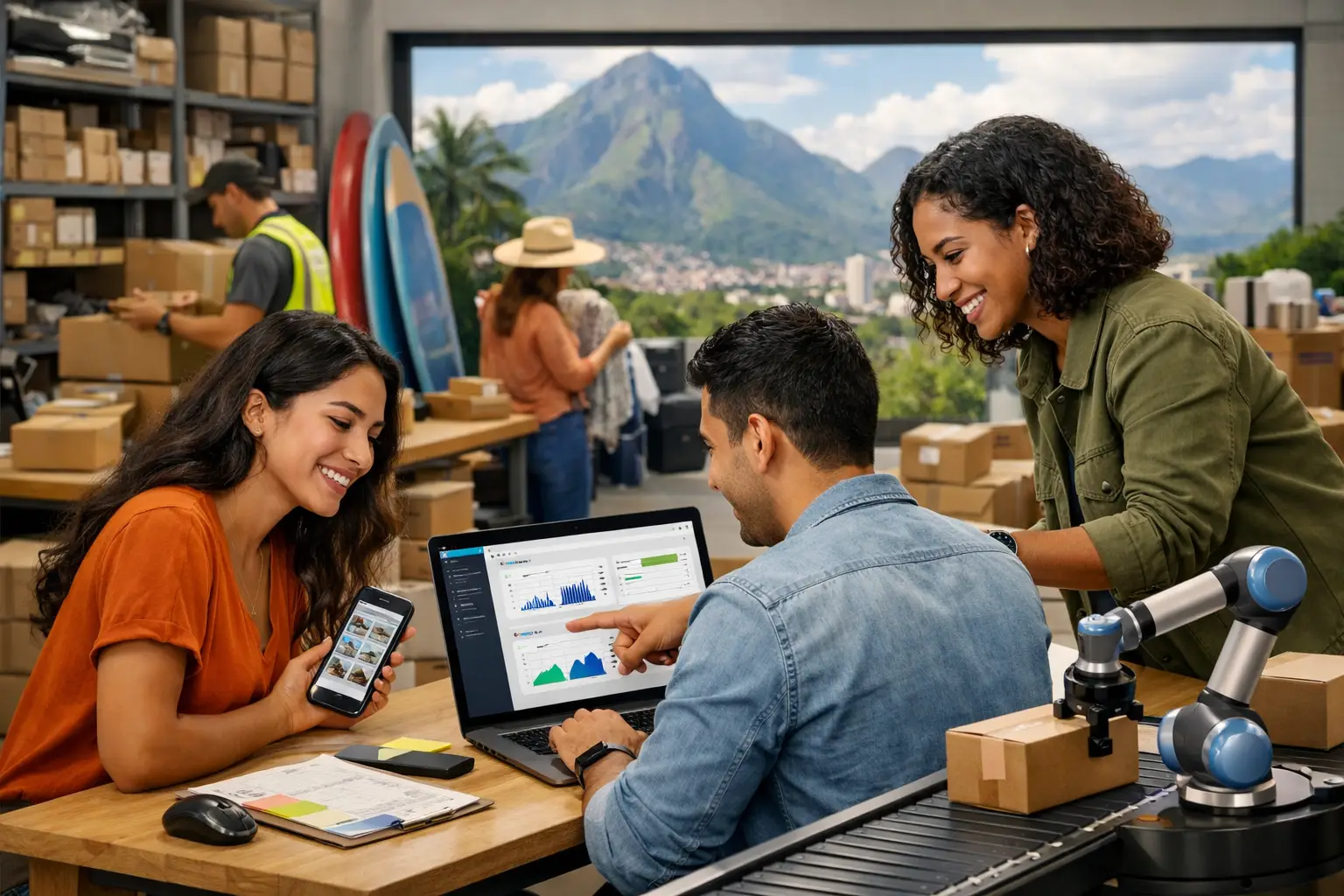
Selling into Mexico gets expensive when a brand treats it like a simple extension of US domestic commerce. The hard part of mexico ecommerce market entry is not demand. It is operational fit. If checkout, tax handling, shipping, and post-purchase flows are built for another market, conversion drops, customs friction rises, and margin erodes fast.
Mexico is attractive for obvious reasons. It is a large consumer market, geographically close to the US, and increasingly familiar with cross-border online buying. But proximity creates a false sense of ease. Brands often assume they can ship from the US, translate a few pages, and call the market launched. That approach can generate early orders, but it rarely produces a durable operating model.
For most mid-market and enterprise brands, the right question is not whether Mexico is worth entering. The real question is what operating structure supports profitable growth without adding avoidable compliance risk.
What makes mexico ecommerce market entry different
Mexico rewards brands that localize the buying and delivery experience, but the level of localization needed depends on category, price point, and order profile. A lightweight test can work for low-order volumes and a narrow SKU set. Once volume rises, the weak points show up quickly.
The first pressure point is landed cost visibility. If shoppers do not understand the full cost of the purchase before payment, cart abandonment rises and support tickets follow. Unexpected duties, taxes, or carrier collection at delivery can damage trust fast, especially for first-time buyers.
The second issue is delivery performance. Cross-border transit from the US into Mexico can be commercially viable, but only when routing, carrier selection, customs documentation, and final-mile handoff are controlled with precision. A shipping option that looks acceptable on paper can become a conversion problem if delivery dates stretch or parcel tracking breaks across handoffs.
The third factor is fiscal and compliance structure. Mexico is not a market where brands should rely on assumptions. Product classification, import treatment, invoicing requirements, and the role of local entities or fiscal structures all affect how scalable the model really is. What works for a pilot may not hold once finance teams need tighter reporting, customer service teams need fewer delivery exceptions, and operations teams need predictable execution.
Start with the market entry model, not the marketing plan
Many brands begin with audience acquisition and localization, then address operations later. In Mexico, that sequence often creates rework. The better path is to decide which entry model matches the business before scaling demand.
Model 1: Direct cross-border from the US
This is usually the fastest way to test demand. Inventory stays in the US, operational complexity stays lower at launch, and the brand can enter the market without standing up a full local infrastructure stack.
That said, direct cross-border only works well when the checkout experience is localized enough to set expectations clearly. Duties and taxes need to be calculated accurately. Shipping options need to reflect realistic delivery windows. Customer communication needs to explain what happens after payment and who is responsible for fees, if any remain outside the prepaid model.
This model tends to fit brands with controlled SKU counts, moderate order values, and a willingness to optimize the lane actively. It becomes less efficient when transit time expectations tighten, return volumes increase, or customs friction starts affecting repeat purchase behavior.
Model 2: Hybrid entry with regional or in-country support
A hybrid model gives brands more control without requiring a full local buildout on day one. This might involve regional fulfillment, local fiscal structuring, or selective inventory placement based on demand concentration and SKU velocity.
The benefit is operational flexibility. Fast-moving SKUs can be positioned closer to demand while long-tail products remain cross-border. Brands can improve delivery speed, reduce shipping cost volatility, and create a more reliable customer experience without overcommitting inventory.
This approach usually makes sense when Mexico has moved beyond a pilot market and started to justify dedicated operational planning.
Model 3: Fully localized market operations
This is the most controlled model and often the most complex. It can support stronger unit economics, tighter delivery promises, and a better end-to-end customer experience, but only if order volume and demand predictability justify the investment.
A fully localized model may be the right move for brands with high order density, repeat purchase potential, regulated product categories, or strong pressure to reduce delivery times materially. It also becomes more attractive when finance and tax teams need more formalized in-country structures.
The four systems that determine whether Mexico works
Too many market entry plans treat Mexico as a shipping lane problem. It is an operating model problem. Four systems usually determine the outcome.
Checkout and payments
Localized checkout is not cosmetic. It affects conversion, trust, and the accuracy of what happens downstream. Currency display, payment method fit, and clear landed cost presentation all influence whether the customer finishes the order and whether the order arrives without friction.
For US-based brands, one common mistake is assuming that a translated storefront is enough. It is not. If the checkout feels imported, pricing looks inconsistent, or taxes are unclear, the brand pays for it in conversion and support costs.
Duty and tax calculation
This is where margin protection starts. If duties and taxes are estimated loosely, brands either under-collect and absorb the difference or overcharge and hurt conversion. Neither scales well.
Good calculation is not just a finance concern. It affects the customer promise, the carrier handoff, and the customs outcome. For Mexico, that means product data quality matters. SKU-level classification discipline matters. Rule logic matters. Brands that want control need these functions connected, not spread across separate providers that do not share context.
Shipping orchestration
Carrier strategy in Mexico should not default to a single provider or a static ruleset. Service levels, injection points, customs handling, and final-mile performance can vary by product, destination, and season.
The brands that perform well in Mexico treat shipping as an orchestrated decision layer. They route based on cost, service reliability, parcel profile, and customs requirements, not just label generation. That is how they preserve margin while keeping the delivery promise credible.
Fulfillment placement
Inventory location is one of the biggest levers in mexico ecommerce market entry, but it is also one of the easiest to get wrong. Move inventory too early and working capital gets tied up in the wrong place. Wait too long and delivery performance can limit growth.
The right answer depends on order density, SKU concentration, replenishment patterns, and return behavior. There is no universal threshold. But once Mexico becomes a repeatable revenue market, fulfillment design deserves board-level attention because it influences both customer experience and landed economics.
Common mistakes that slow growth
The first mistake is treating cross-border operations as temporary plumbing that can be fixed later. In practice, early infrastructure decisions shape cost structure and customer experience for months.
The second is separating tax, checkout, shipping, and fulfillment into disconnected projects. That creates blind spots. A finance team may solve for compliance while the ecommerce team hurts conversion, or the logistics team may reduce parcel cost while increasing customs delays. Mexico rewards coordination.
The third is testing the market with too little operational transparency. If teams cannot see delivery performance, duty collection accuracy, exception rates, and margin by order type, they are not really testing. They are guessing with revenue attached.
What good looks like in practice
A strong Mexico launch is usually not the one with the most infrastructure on day one. It is the one with the clearest path from test to scale. That means the brand can start lean, but the underlying systems are designed to add more control as volume grows.
In practice, that looks like accurate landed cost calculation at checkout, localized pricing and payment support, shipping rules that adapt by order profile, and a fulfillment plan that can shift as demand becomes clearer. It also means the finance, tax, and operations teams are working from the same operating logic rather than patching over each other’s constraints.
This is where an integrated platform matters. When tax calculation, localized checkout, shipping orchestration, and multi-country fulfillment are managed as one operating layer, brands move faster and make better decisions. They do not waste months stitching together vendors that each optimize one step while creating friction in the next. ShipSmart is built for exactly this kind of expansion model.
Mexico is a strong market, but it is not forgiving of lazy operating design. Brands that win there do not just ship into the country. They build an entry model that protects margin, reduces friction, and gives them room to scale with control. If the operating layer is right, growth in Mexico becomes much more predictable – and that is what serious expansion teams need.